10. Walk the Line

9. Brokeback Mountain
 8. Walk on Water
  7. Junebug
  6. Oldboy
 5. The Weather Man
 4. The New World
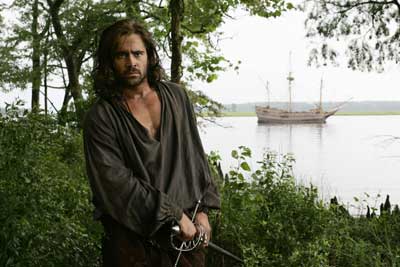 3. Grizzly Man
2. Pride & Prejudice
 1. King Kong
 8. Walk on Water 7. Junebug 6. Oldboy5. The Weather Man 4. The New World3. Grizzly Man 1. King Kong

Despite having state of the art special effects, King Kong is a real throwback to early cinema. It emphasizes what going to the movies in the 30s was all about, the spectacle of it, the ability to see things you could not see anywhere else. While the interest seems to be waning, this is still what going to the movies is about in the present. In a time when we're seeing this drastic shift toward home video instead of going to the movie theater, it is very important for a film of this scale to be released, something that Spielberg also displayed in the less successfully realized War of the Worlds. The two disaster films differ in that Kong is a perfectly executed movie on all fronts: the characters, casting choices, visual effects, music score, a beating heart and even a suitably somber conclusion.
A good portion of the film’s first hour is dedicated to fleshing out the characters and as a result there is a multitude of main characters who feel important and interesting and relatable. The inspired casting of Jack Black in the megalomaniac role of Carl Denham pays off handsomely. He gives it just enough humor and humanity to avoid being singled out as the film’s villain; instead he is an entertainer who succumbs to a villainous ideology that he exhibits taking the blame. Surely Peter Jackson sees some of himself in this character. Last year Naomi Watts proved that she was not afraid to look silly doing preposterous dance moves in I Heart Huckabees and similarly goes for broke as an out-of-work vaudevillian performer. Adrian Brody is also effective as the chivalrous writer who must convey both yearning love and unimaginable fear with the briefest of facial expressions. And of course there is the mighty beast himself who is a visual marvel in his execution and a tender achievement in his characterization. In short, anyone who really loves going to the movies must buy a ticket for King Kong and thank Peter Jackson for doing his part to keep the movie houses in business.

 himself is quick to acknowledge that his situation is not quite as unique as it sounds, “there’s Michael Radford, for instance, who did Il Postino. He’s a British guy directing a movie in Italian from a book that was set in Chile where people spoke Spanish, and that worked fine.” (Ulin, 49) Regardless of exact historical examples, it is unquestionable that Men with Guns serves as a distinct milestone in the hybridization of Latin American and American filmmaking.
  The most important role that editing plays in the film is its segue into flashback sequences. Throughout the narrative we are being transported back in time to events in the lives of Dr. Fuentes, Domingo and Padre Portillo that have had profound effects on their lives. These temporal shifts are marked by sound and color techniques not seen in the rest of the film. Dr. Fuentes’ flashbacks are presented in black and white with almost entirely muted diegetic sound. In the flashbacks of Domingo and Padre Portillo, the color is saturated and adorned with a golden tint contrasting the natural look of the present tense. To properly appreciate the significance of these stylistic devices we must consult the editing in Lone Star. Lone Star’s most defining technical characteristic is its approach to flashback through its time shifts that appear seamless and unnoticeable. This is achieved through in-camera transitions that pan from one time period to another without cutting between shots. For example, a shot will begin with one character in present time standing in a bar and then pan over to that character’s father sitting in the same bar thirty years earlier. Sayles believes that “A cut is very much a tear. You use a cut to say there’s a separation between this thing and that thing.” (Sayles and Smith 230) The editing in Lone Star emphasizes the theme that the past is still very much a part of the present and repeatedly connects the two time periods.
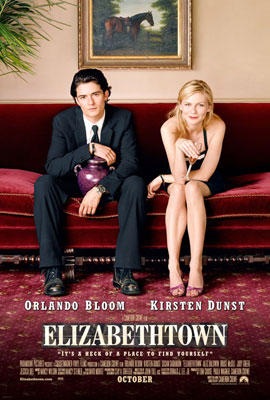
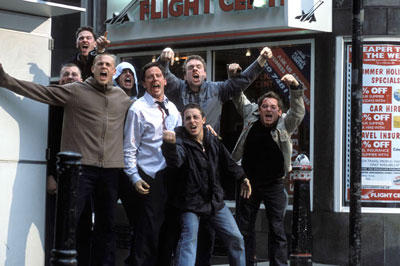
 One of my most anticipated releases of the fall and sadly one of my biggest disappointments. This is not to say Lord of War is a bad movie, not in the least, it’s just a decent movie with some spectacular scenes scattered throughout. The brown-brown hallucination scene in particular stands out as one of the more memorable scenes from this year. Sadly the film is bogged down by a narcoleptic voice-over from Nicolas Cage that intrudes on the soundtrack at an alarming frequency. Cage’s delivery isn’t half as charming and entertaining without simultaneously seeing his entire charismatic persona on screen. The movie also follows the Goodfellas formula a little too closely and I think the film would have benefited from a pared down approach focusing on a more contained temporal space as I found myself very restless during the first 45 minutes of excessive exposition. Although limiting the scale of the story would limit the epic character study the film is attempting to achieve and it cannot be ignored that the ending message is a powerful one. The opening credits deserve special attention for being an extremely inventive and entertaining title sequence that also manages to incorporate the film’s dominant theme in some 3 minutes of screen time.
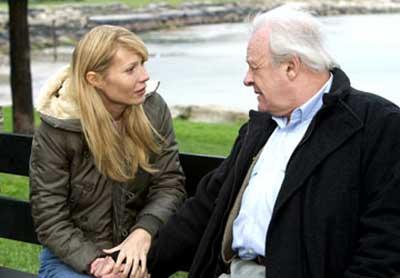 Hard to find much to say about this one other than that it’s a pretty solid crowd pleaser with great acting. The film plays things pretty safe, and that’s a virtue, it doesn’t try to overreach its boundaries and is content with retaining the intimacy of the stage play rather than trying to expand its issues and locations. Anthony Hopkins turns in a characteristically flawless performance riding strong on his Errol Flynn-like international accent and his twinkling blue eyes. Gwyneth Paltrow and Jake Gyllenhaal also give sterling performances that make this very “chatty” screenplay spring to life with engaging characters. Wont find anything groundbreaking here but it’s a guaranteed good time at the movies.
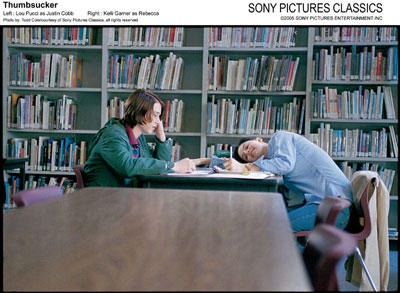 An incredibly strong ensemble of disparate actors buoys this coming-of-age narrative that can’t quite compare to the bevy of accomplished performances. Not a weak link out of the entire cast: Lou Pucci, Vincent D’Onofrio, Tilda Swinton, Keanu Reeves, Vince Vaughn, Benjamin Bratt and Kelly Garner; all give layered and personalized performances. It is apparent that all the actors have taken their roles very seriously and capture painstaking detail in fleshing out their characters. Vince Vaughn’s frumpy jacket during the debate conference is an unforgettably hilarious and honest choice of costume design. However the film itself feels even more heavily medicated than the lead character and thus it lends itself to self-indulgence by way of excessive slow motion and general lethargy.
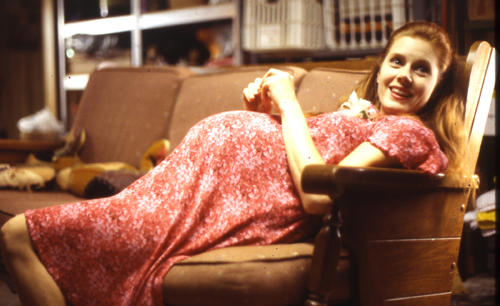 Director Phil Morrison makes a strong and self-assured feature debut that has a very distinct personality unlike anything I’ve seen in recent memory. Junebug explores the dynamics of a dysfunctional family in North Carolina during the coinciding events of the last stages of the daughter-in-law’s pregnancy and the older brother’s return after 3 years of absence to introduce his South African new wife to the family. Morrison tells the story by blending realism and formalism into a peculiar concoction that feels fresh and unexpected at every turn. The South African wife, Madeleine (Embeth Davidtz), happens to also be in North Carolina on business, investigating a potential art client. The client is an elderly, mentally challenged southern painter who draws peculiar pictures of civil war reenactments with emphasis on racial injustice and enlarged genitalia. These scenes between him and Madeleine play out like a documentary peering into the mind of this confusing and intriguing character. But then there are flashy opening credits, obtrusive musical cues and fade outs that call attention to the structure yet somehow these contrasting approaches manage to coexist rather than combat each other.
 I am one of about 15 people who still haven’t seen Fernando Meirelles’ City of God but get a sense that The Constant Gardener is very similar in its admirable quality of being a highly entertaining thriller while incorporating a global awareness to the background. Think the exotic and unfamiliar locales of The Bourne Identity/Supremacy movies with an added social and political commentary. In The Constant Gardener, Ralph Fiennes stars as Justin, a British diplomat whose wife is brutally murdered while working in Africa. Justin becomes obsessed with uncovering the truth behind the murder and embarks on a heedless journey to expose a conspiracy. Fiennes gives a brilliant performance and is more expressive with his eyes alone than most actors can convey with their whole performances. His reaction to learning about his wife’s murder in the beginning is both unforgettable and unexpected. The film manages to balance itself as both a satisfying Saturday night at the movies that can attract the younger audience with its stylish filmmaking as well as the older audience with its thought-provoking substance that never becomes too didactic to alienate the younger crowd.
 Yesterday I made it to my first contemporary release which happened to be the crowd pleasing and surprisingly critic pleasing, Red Eye. While I might have benefited by seeing it without high expectations from its high rating on RottenTomatoes.com, I still managed to find it to be an entertaining, campy, thrill-ride not unlike the similarly gimmicky Cellular, although not quite as fun as that self-consciously goofy beat-the-clock thriller. It’s more than a bit difficult to talk about Red Eye without giving away the fun of the element of surprise aspect so integral to the film’s enjoyment, much applause to Dreamworks for its limited teaser trailer.
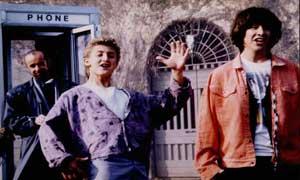 When it comes to altering history, these slackers do not always act as safely as one might hope they would. Bill & Ted consistently goof off throughout the many time periods, whether it be indulging in an old-fashioned barroom brawl or dressing up in knight’s armor and emulating Star Wars. Not to mention that they entrust Ted’s 10-year old brother to watch over Napoleon while they continue gathering up other historical personalities. Marty exercises more understanding of the situation’s severity but nevertheless makes questionable decisions like jeopardizing the possibility of making it to the town square on time by letting himself get goaded into playing one more rock-and-roll song at the high school dance. That marks the first in a series of questionable decisions concerning his extremely finite chance to return home to 1985: not only does he play one more song but he takes the time to change his clothes before making it to the meeting point, “What, did you think I was gonna go back in that zoot suit?” Lastly, Marty awards himself only ten extra minutes to go back and attempt to save Doc’s life. Even though he prefaces with the insightful statement “I got all the time I want, I got a time machine,” he still decides that a mere ten minutes should suffice.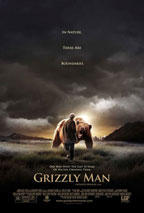
 In related news, I also rented two recent, rather mediocre films made by talented writer/directors: Bright Young Things (2003) – Stephen Frye and Silver City (2004) – John Sayles. Bright Young Things was entertaining but slight, with a charismatic lead and fun supporting roles by a horde of celebrated British actors. It proved to be mildly interesting in terms of its role as a British “Heritage” film – literary adaptation, verdant landscapes, upper class social comedy, episodic narrative, familiar British actors, painstaking detail in recreating early 40s time period and an emphasis on spectacle.
 Silver City was sadly a disappointing bore, made all the worse in comparison to Sayles’ strong work in films like Sunshine State and Lone Star. The most glaring problem is the incredibly poorly chosen lead character played by Danny Huston (The Aviator). Huston could make a good smarmy journalist as a side character but having him elevated to lead is just too much responsibility for this type of character. A much more palatable choice would have been to switch his character with the brief role played enthusiastically by Tim Roth. However all the blame can’t be rested solely on Huston’s misused shoulders, there are a few other major flaws, particularly the meager editing, done by Sayles himself, who lets scenes run on far longer than they should. There are also some issues with tone, the film can never decide if it wants to be a satire, a political indictment on the Bush office or a modern day All the President’s Men-type mystery. While I am often a big fan of genre distortion, as my Brian De Palma love attests, the dissonance between scenes in Silver City is more annoying than enticing.
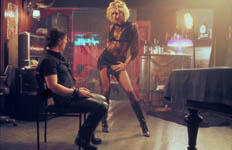
The genre known as film noir came into being during the 1940’s and 1950’s and is largely regarded as an American genre in spite of its title donated by French critics. Thomas Schatz describes the progenitors of this genre as displaying two distinct styles: “visually, these films were darker and compositionally more abstract than most Hollywood films; thematically, they were considerably more pessimistic and brutal in their presentation of American life.”[1] Brian De Palma’s Femme Fatale (2002) immediately evokes the film noir genre, not only by way of its title but also in the fact that the initial sound and image comes from a clip of Double Indemnity (1944), one of the seminal works in the genre featuring cinema’s most memorable femme fatale. However, De Palma does not adhere to either of the elements that Schatz supplies for the genre. Instead it appears more in line with what the genre has come to generally (but not exclusively) represent: the plethora of hard-boiled detective mysteries that were being produced during the late 1940s and ‘50s. Films that often center on a morally ambiguous protagonist called in to work on a case that leads into society’s seedy underbelly where he must struggle against the social system to do what he believes to be right. The protagonist is usually drawn deeper into this world by a “femme fatale”, a woman who seduces him with her supposed innocence and naiveness but later is revealed to be a savvy and genuine threat possessing ulterior motives.
On the matter of genre, Schatz also says that “as one sees more genre films, one tends to negotiate the genre less by its individual films than by its deep structure, those rules and conventions which render” the genre.[2] This is one aspect that makes Brian De Palma’s Femme Fatale (2002) an invigorating cinematic experience. As an auteur, De Palma’s two prominent characteristics are scrambling of genres and mimicry of his favorite directors (Hitchcock in particular).
After the introductory nods to the genre, the first act of Femme Fatale proceeds more like an erotic thriller, a genre De Palma has more experience in with works like Dressed to Kill (1980), Blow Out (1981) and Body Double (1984). The film begins with a diamond heist sequence in which the femme fatale, Laure (Rebecca Romijn-Stamos), seduces a female model by guiding her to the bathroom for an erotic encounter that echoes the opening shower sequence of Dressed to Kill. It is not until the second act in which the male protagonist, Nicolas Bardo (Antonio Banderas), takes on a larger role that it turns into typical film noir. Bardo is an updated version of the cynical gumshoe from the late 1940s; the 21st century version has morphed into a cynical paparazzo. Laure, the target he is ordered to photograph, comes to fully embody the femme fatale role that was only hinted at during the first act.
First, she intellectually seduces Bardo by playing the battered, damsel in distress role, dressed in a virginal white outfit complete with scarf and black sunglasses, to capture his interest. Second, she physically seduces him in order to frame him for her supposed kidnapping. Lastly, she emotionally seduces him through jealousy in order to ensure him going through with the final stage of her plan. As the evidence mounts, Bardo sinks deeper and deeper into trouble with no apparent refuge. Similar to his film noir forefather in Double Indemnity, Bardo eventually meets his fate at the hands of the femme fatale’s bullet - although this is not where De Palma chooses to end his film. Instead, the third act transforms into a sort of fairy tale where the film noir segment is revealed to have been a prophetic dream on the part of Laure. Completely going against the generic conventions, Laure chooses a path of redemption and romance instead of greed and murder. This change of heart is accepted because De Palma has transmuted his characterization of the femme fatale, most notably by promoting her to primary character as well as visually representing her more vibrantly than the shadowy women of the classical Hollywood noir.
De Palma also voices an underlying subtext that could never be made explicit during the heyday of Hollywood cinema: homosexuality. In what can initially be taken as a throw-away scene, Bardo impersonates a homosexual in order to gain Laure’s trust. It is easy to ignore the implications of this scene because Banderas has played a similar version of this homosexual persona before, both for laughs and sincerity. However, if one is to look at the film through the classical auteur theory, we must question why De Palma would include the scene. One can conjecture it is commentary on the subliminal message sent in some of the old films where the male detective is better off on his own and his problems are all caused by the presence of a woman. It is also intriguing that De Palma comments on the genre itself by making the film noir segment the only portion to exist entirely outside the realm of reality.
Classical auteur theorist, Andrew Sarris believes that the criteria for being considered an auteur is that “a director must exhibit certain recurrent characteristics of style, which serve as his signature” as well as an interior meaning being “extrapolated from the tension between a director’s personality and his material.”[3] Both thematically and technically, Femme Fatale shares many similarities with the rest of De Palma’s oeuvre. While his allusions to Hitchcock do not feature as blatantly as say the presence of Rear Window (1954) in Sisters (1973) or Psycho (1960) in Dressed to Kill, some subtle Hitchcockian tendencies can be discerned. The clearest visual similarity is the duality of the hair colors Laure wears in correlation to the Kim Novak character in Vertigo (1958). Thematically he utilizes the “wrong man” scenario during the Bardo being framed segment, a subject Hitchcock was very fond of using in films such as The Man Who Knew Too Much (1956) and North by Northwest (1959).
Another affinity to Hitchcock is De Palma’s obsession with voyeurism. This motif can be found in virtually all of his films, and Femme Fatale is no exception. Intrinsically there is the decision to have Bardo a voyeur by livelihood and by nature. The medium of photography takes precedent during key scenes in the story: Laure herself posing as a member of the paparazzi during the diamond heist, the numerous shots of the wedding photographer waiting for the sun to come out during the truck sequence as well as the film ending on a freeze frame emulating a snapshot followed by the collage of photographs that Bardo was compiling. Some of the most heavily voyeuristic sequences include Laure’s security guard secretly watching Bardo while negotiating the sale of the picture, Bardo watching Laure purchase a hand gun and the last seduction scene in which Laure performs a strip tease for another man while Bardo watches from the stairs. In these scenes, Laure’s knowledge of Bardo’s voyeurism fuels her actions; Bardo on the other hand is unaware that he is being examined; both by the direct action of the security guard and the reflexive manner of Laure watching him watch her.
De Palma’s dependence on homage is not to say he does not possess stylistic tendencies of his own, namely his revolutionary work using split-screen to show parallel action. His elaborate split-screen scenes in Femme Fatale are direct descendents of Sisters while the complicated overhead shots panning over walls of ceiling-less rooms in Snake Eyes is echoed during Bardo’s interrogation scene. There is also the reoccurring use of dream sequences in practically all his films, two of the most elaborate dreams being found in Femme Fatale and Dressed to Kill. The juxtaposition of dreams in these two is of importance in that Femme Fatale’s structure is one very lengthy dream book-ended by two reality segments while Dressed to Kill’s reality is book-ended by two lengthy dreams.
In response to Andrew Sarris’ definition of the auteur, Peter Wollen says that it is not enough to simply have recurring themes; the director “must be defined in terms of shifting relations, in their singularity as well as their uniformity.”[4] For more than twenty years, De Palma has been accomplishing variety by playing with genre conventions and invoking established auteurs within a spectrum of stories. While his creative stamp may lie most firmly in the erotic thriller, his career has encompassed war, spy/espionage, horror, comedy, psychological thriller, gangster and even science fiction. Wollen went on to describe a valuable work as being “one which challenges codes, overthrows established ways of reading or looking, not simply to establish new ones, but to compel an unending dialogue.”[5] This is certainly a fit description for Femme Fatale, a film that takes the obvious generic conventions of film noir and mixes them so thoroughly with DePalma’s auteur tendencies that it creates an amalgam that can no longer be described conclusively as a film noir, or even an erotic thriller for that matter.
References
Sarris, Andrew. “Notes on the Auteur Theory in 1962.” In Film Theory and Criticism, edited by Leo Braudy and Marshall Cohen. Oxford: Oxford University Press, 2004.
Schatz, Thomas. “Film Genre and the Genre Film.” In Film Theory and Criticism, edited by Leo Braudy and Marshall Cohen. Oxford: Oxford University Press, 2004.
Schatz, Thomas. Hollywood Genres. Philadelphia: Temple University Press, 1981.
Wollen, Peter. “The Auteur Theory.” In Film Theory and Criticism, edited by Leo Braudy and Marshall Cohen. Oxford: Oxford University Press, 2004.
[1] Thomas Schatz, Hollywood Genres, (Philadelphia: Temple University Press, 1981), 112.
[2] Thomas Schatz, “Film Genre and the Genre Film,” in Film Theory and Criticism, ed. Leo Braudy and Marshall Cohen (Oxford: Oxford University Press, 2004), 692.
[3] Andrew Sarris, “Notes on the Auteur Theory in 1962,” in Film Theory and Criticism, ed. Leo Braudy and Marshall Cohen (Oxford: Oxford University Press, 2004), 562.
[4] Peter Wollen, “The Auteur Theory,” in Film Theory and Criticism, ed. Leo Braudy and Marshall Cohen (Oxford: Oxford University Press, 2004), 575.
[5] Peter Wollen, “The Auteur Theory,” in Film Theory and Criticism, ed. Leo Braudy and Marshall Cohen (Oxford: Oxford University Press, 2004), 580.

Thomas Schatz explores another difficult distinction: the film genre versus the genre film. The vehicle he uses to explore this idea is that of semiotics, the study of signs and symbols as elements of language and communication. Schatz defines three areas for genre analysis: characteristics shared by basically all genre films, characteristics shared by all films within a given genre and characteristics that isolate one genre film from all others. In addition, he explores the separation of genre in terms of social context, “the determining, identifying feature of a film genre is its cultural context, its community of interrelated character types whose attitudes, values, and actions flesh out dramatic conflicts inherent within that community.”[2] From this we get the stereotypical characters that are symbols or placeholders that serve a specific function within the genre as well as the particular social problems that are inherent to certain genres. Schatz acknowledges that vital elements of one genre can still be found in other genres but in a different context (he addresses the presence of musical numbers in many westerns and gangster films that are certainly not considered musicals). Instead, we identify a genre through the conflict situation and the types of characters found in the story as established by the grammar of the film genre.
Linda Williams synthesizes these modes of genre distinction in order to examine their physical effects on the spectator. She writes on three genres that she describes as so excessive and overwhelming in a specific emotion that they produce a bodily sensation in the viewer. This effect is achieved visually through spasms induced by overwhelming sadness from the melodrama, fear and terror from the horror film and sexual pleasure from pornography as well as aurally through tears, screams and moans. Williams does not attempt to claim these are the only genres that evoke such sensations on the viewer, rather she isolates these three because she feels they have especially low cultural status and “the success of these genres is often measured by the degree to which the audience sensation mimics what is seen on screen.”[3] This mimicry is what Metz would refer to as the secondary identification with the characters on screen.
In terms of melodrama, Williams grounds her analysis in “women’s weepies,” such as Stella Dallas (1937) or Steel Magnolias (1989) that are characterized by an element of overwhelming pathos, often spurred by a terminal illness or an accidental death. She does not confine her examination to this gender-exclusive genre however. She makes note of an evolving trend that has created the male version of the weepie; Ordinary People (1980) is a prime example. These observations highlight a Laura Mulvey type of distinction between the male and female identification that Williams explores at great length throughout her article.
What Williams does not do is interrogate the possibility of a film belonging to more than one of these “body genres.” One of the examples she lists under contemporary horror films is a perfect subject to explore this notion, Brian DePalma’s Dressed to Kill (1980). If we are to look at it in terms of a horror, it is arguable that we can just as easily look at it in terms of pornography. Dressed to Kill certainly goes to excess in both regards: the gruesome violence of the murder scenes makes the viewer jump and scream out of repulsion while the film’s sexual scenes and dialogue are as explicit as many of the sequences found in what is considered to be traditional pornography.
If we are to look at this film through Altman’s semantic/syntactic approach, we can propose that the film is not genuine pornography because even though it utilizes semantic elements of pornography, the context of the events is within the investigation of a potential serial killer. We can also use Schatz to further dispel the idea of a pornography if we incorporate his idea that “the most significant feature of any generic narrative may be its resolution – that is, its efforts to solve, even if only temporarily, the conflicts that have disturbed the community welfare.”[4] With this in mind we can more accurately classify Dressed to Kill in the genre of horror or thriller since it concludes with the killer’s identity being revealed and being apprehended by the police, instead of a sexual activity as would be expected in pornography. Williams’ classification process enforces a more rigid structure that is not well equipped for such hybridization and films like Dressed to Kill prove to be a challenge to dissect.
Schatz proposes that “the sustained success of any genre depends upon at least two factors: the thematic appeal and significance of the conflicts it repeatedly addresses and its flexibility in adjusting to the audience’s and filmmaker’s changing attitudes toward those conflicts.”[5] One subgenre that is slowly emerging over time that fits in well with Williams’ other body genres is the gross-out comedy, or films that derive their humor primarily from bodily functions that cause the viewer to cringe out of disgust while also evoking laughter.
The gross-out comedy has long been considered as a genre primarily geared toward a teenage-male audience, thanks to teen-sex-comedies like Porky’s (1982), The Last American Virgin (1982) and Losin’ It (1983). These films all feature scenes in which sexual situations are mostly played for laughs as they frequently result in mishap and embarrassment. However, the release of There’s Something About Mary in 1998 helped expand the genre to appeal to an older audience of both males and females. Instead of the horny teenagers of the ‘80s, the lead characters are now lovelorn 30-somethings and the title character is a strong, independent female played by Cameron Diaz. The semantics were still the same (masturbation, voyeurism, embarrassment, genital pain) but the syntax was elevated to a more (theoretically) mature level.
Due to the overwhelming success of the film, an onslaught of gross-out comedies was released in the following years. However, the genre was now expanded to films that included “toilet humor” featuring scenes of excrement and urination, but sidestepping the explicit sexual element like Big Daddy (1999). That same year American Pie (1999) popularized a synthesis of sex humor and toilet humor by having characters unknowingly consume bodily fluids beginning with semen and progressing to urine and dog feces in the sequels. This trend was continued in other imitators like Tomcats (2001), Van Wilder (2002), and perhaps the ultimate example of gross-out humor, Jackass: The Movie (2002).
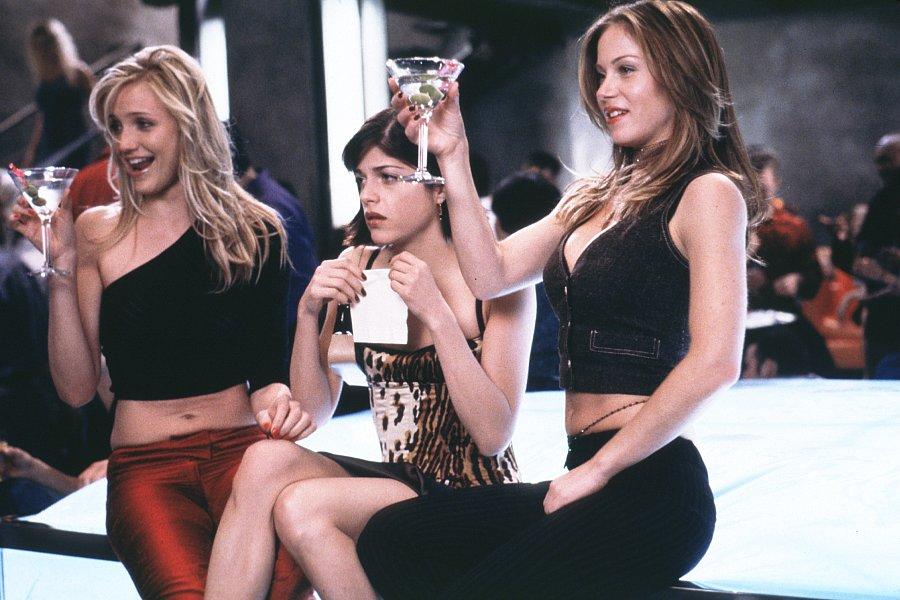 The most interesting advancement in the genre is the advent of the female-led gross-out comedy that appeals specifically to teenage girls with limited cross-over appeal. This can best be seen in The Sweetest Thing (2002), which also stars Cameron Diaz who has begun to serve as an identifier of the genre film. The film is headed by three female leads who realize they need to reexamine their approaches to dating in order to obtain a desirable husband, all the while featuring numerous and extensive jokes about oral sex, fecal matters and on-screen female regurgitation. Another example of the genre reaching broader appeal can be found in Meet the Parents (2000). In this case, the film is a family comedy focusing on middle-aged adults in which the topic of marriage and other mature subject matter has been injected with gross-out humor involving faulty septic tanks and feline urination.
This genre expansion in terms of gender and age relates back to Williams’ inclusion of the “male weepie.” This is part of a larger discussion about female identification that Williams explores through this as well as the emergence of bisexual pornography in which the classic rules of sexual identification have been morphed. Williams feels that these advancements are important in that they acknowledge a feminine viewing pleasure that was purported not to exist in classical gender theory such as Laura Mulvey’s “Visual Pleasure and Narrative Cinema.” Mulvey expanded upon Metz’s idea of primary identification by using psychoanalysis to suggest that the cinematic identification is exclusively male. Later works by Tania Modleski and Jackie Stacey have given examples similar to Williams that strongly persuade for the existence of a female identification. Due to films like There’s Something About Mary and The Sweetest Thing, we can firmly campaign for the presence of the female gaze in the gross-out comedy.
In order to properly define the gross-out comedy as a stable genre we must examine it according to both Altman and Schatz’s theoretical requirements. Considering the inherent role that sex plays in the majority of the bodily functions of the genre, it is equitable to say that all films of this nature must also be considered romantic comedies or at least feature key romantic subplots. Without an object of desire to lust after, the range of bodily functions available to create comedic set-pieces is greatly diminished. We can propose that the semantics of the genre frequently include sex, masturbation, teenagers, vomit, excretion, urination and bodily pain while the syntax is that of the classical Hollywood romantic comedy. The Schatzian approach would consider the films in terms of social conflict and narrative resolution: Boy meets girl, Boy loses girl, Boy needs to learn how to recover girl, and Boy wins back girl (or vice-versa as the identification oscillates).[6]
Sadly, there is a potential futility to be found within the genre. We can return to Altman’s theory of semantic/syntactic synthesis in constituting a successful genre which states that to achieve durability a genre must possess both a coherent and stable syntax and not just recurring semantics.[7] In these terms, the gross-out comedy appears more as a fad than as a genre all of its own. Seeing as its roots lie so intricately in the firmly established romantic comedy genre, the semantics of the gross-out can be perceived as responding to a popular interest during a particular period of time. With this we enter back into Schatz’s theory about the discourse between the audience and the studios suggesting the films of the late 1990’s and early 2000’s appear to be answering to some cultural desire to be grossed-out or disgusted. However, as Schatz suggests, it is likely this interest will quickly dissipate much like it did after the spout of raunchy teenage-sex-comedies of the early 1980’s.
If the genre is (conceivably) destined to last only for sporadic, brief periods of time, one must question the significance of investigating it so thoroughly. There are a number of answers to this. Most provocatively, it opens discussion on the much broader topic of laughter in general. The psychological and psychoanalytical discourse required to properly tackle a query such as how a physical reaction like the cringe that is characterized by disgust or fear can somehow be the impetus of laughter is too immense to be covered here. This field harkens back to the question of spectatorship in relation to genre.
The return to spectatorship marks the return to the central text of Williams’ “body genres.” One of the many important aspects of her article is the new approach to genre distinction: the physical effect on the viewer. In this sense, the gross-out comedy must be taken into account within a contemporary revision of her theory. The genre not only satisfies the visual, aural and low-culture requirements of her body genre criterion, the genre’s existence is fundamentally based on the act of bodily secretion and therefore must be considered as an integral member within this analysis.
[1] Rick Altman, “A Semantic/Syntactic Approach to Film Genre,” in Film Theory and Criticism, ed. Leo Braudy and Marshall Cohen (Oxford: Oxford University Press, 2004), 686.
[2] Thomas Schatz, “Film Genre and the Genre Film,” in Film Theory and Criticism, ed. Leo Braudy and Marshall Cohen (Oxford: Oxford University Press, 2004), 695.
[3] Linda Williams, “Film Bodies: Gender, Genre, and Excess,” in Film Theory and Criticism, ed. Leo Braudy and Marshall Cohen (Oxford: Oxford University Press, 2004), 730.
[4] Thomas Schatz, “Film Genre and the Genre Film,” in Film Theory and Criticism, ed. Leo Braudy and Marshall Cohen (Oxford: Oxford University Press, 2004), 699.
[5] Thomas Schatz, “Film Genre and the Genre Film,” in Film Theory and Criticism, ed. Leo Braudy and Marshall Cohen (Oxford: Oxford University Press, 2004), 700.
[6] Linda Williams, “Film Bodies: Gender, Genre, and Excess,” in Film Theory and Criticism, ed. Leo Braudy and Marshall Cohen (Oxford: Oxford University Press, 2004), 736.
[7] Rick Altman, “A Semantic/Syntactic Approach to Film Genre,” in Film Theory and Criticism, ed. Leo Braudy and Marshall Cohen (Oxford: Oxford University Press, 2004), 690.